



Esports is entering its most transformative era yet, according to major global research from Logitech G showing increasing cultural acceptance and a significant rise in the number of people who view professional gaming as a legitimate and aspirational career path.
The newly released study, based on 18,000 respondents across 12 countries, shows that nearly one in 10 (8 per cent) of people globally would choose to become a professional gamer if they could restart their career, ranking higher than professions such as politician (6 per cent), recruiter (6 per cent), or professional racer (5 per cent). Gen Z respondents ranked pro gaming among their top career ambitions at 15 per cent, if they had the chance to start over or pick a new career, compared with 10 per cent of Millennials, 7 per cent of Gen X, and just 3 per cent of Boomers.

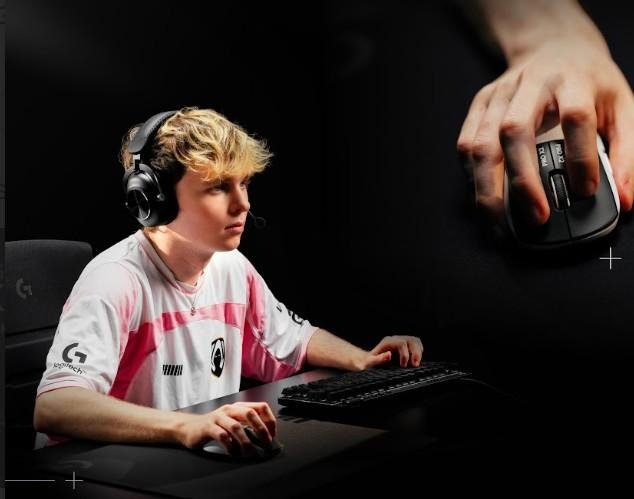
Perceptions of gaming as a legitimate career are also shifting. More than half (54 per cent) of people globally say esports is a legitimate professional path, rising sharply among younger generations to 67 per cent of Gen Z and 60 per cent of Millennials. Markets such as Brazil (87 per cent), South Korea (82 per cent), China (79 per cent), and Switzerland (70 per cent) are the most supportive, while several European nations remain more sceptical.
Viewership continues to underline esports’ cultural momentum. The League of Legends World Final in 2024 drew a 50 million peak global audience*, far surpassing many major traditional sporting broadcasts. Live attendance is also booming, with more than 62,000 spectators filling the arena for the 2025 Honor of Kings KPL Grand Finals in Beijing*.
Despite the sector’s growth, barriers remain. The top concerns preventing people from pursuing esports careers include financial risk (42 per cent), high competition levels (34 per cent), and lack of parental or societal support (31 per cent). Most respondents, however, believe these challenges are solvable, with calls for more mainstream media coverage, professional training facilities, clearer education pathways, and greater transparency around earnings.
The global esports audience reached 611 million in 2024, with projections placing the figure at 641 million by the end of 2025*. The industry is now valued at $2.1bn, with forecasts predicting it will reach $7.5bn by 2030, driven largely by sponsorship revenue*. These figures sit within a wider global games market, which was expected to reach $197 billion in 2025, growing +7.5% year on year*.
Opinions remain split, however, regarding the inclusion of esports in the main Olympic Games, with 49 per cent of Gen Z supporting the addition, compared to one in five (21 per cent) Boomers. The data also shows a sharp divide over which emerging activities the public considers Olympic‑worthy. While rhythmic gymnastics, sport climbing, skateboarding and surfing attract the strongest backing, support falls away for less traditional pursuits.
Esports sits in the middle of the pack at 22 per cent – ahead of squash, lacrosse, and netball – but well above fringe suggestions such as dodgeball, mini‑golf, and cup stacking, which draw minimal enthusiasm. The rankings underline that, although opinion on competitive gaming remains mixed, it is still viewed as more suitable for Olympic inclusion than several other unconventional contenders.
“Esports has evolved into a global cultural force, creating meaningful pathways into technology, creativity, and high-performance careers. Our research shows clear and growing recognition of competitive gaming as a legitimate profession,” said Derek Perez, Head of Gaming Communications at Logitech G.
“For more than two decades, Logitech G has played a central role in shaping the competitive gaming ecosystem, working with elite players, teams, and leagues while investing in grassroots, amateur, and collegiate programmes globally. We remain committed to empowering players, gamers and creators at every level, and to ensuring the industry continues to grow in an inclusive and accessible way.”
More than 50 years after the earliest tournaments, esports has matured into a global ecosystem spanning competition, technology, education, and entertainment. As audiences swell, aspirations change, and legitimacy grows, esports is no longer approaching its peak – but entering its prime.
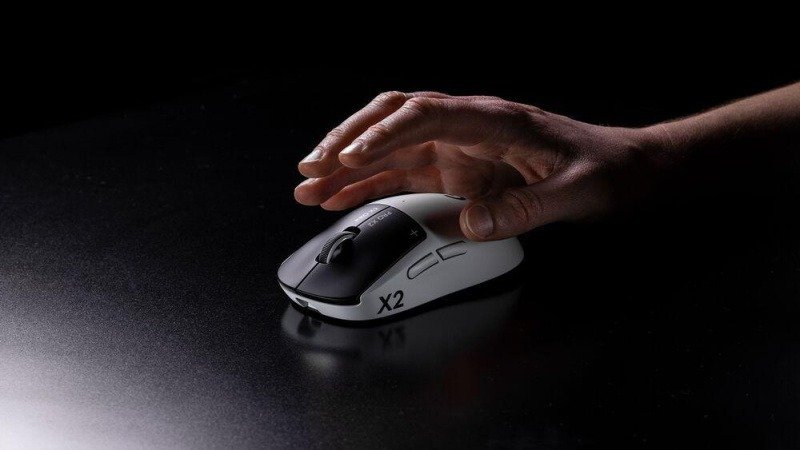
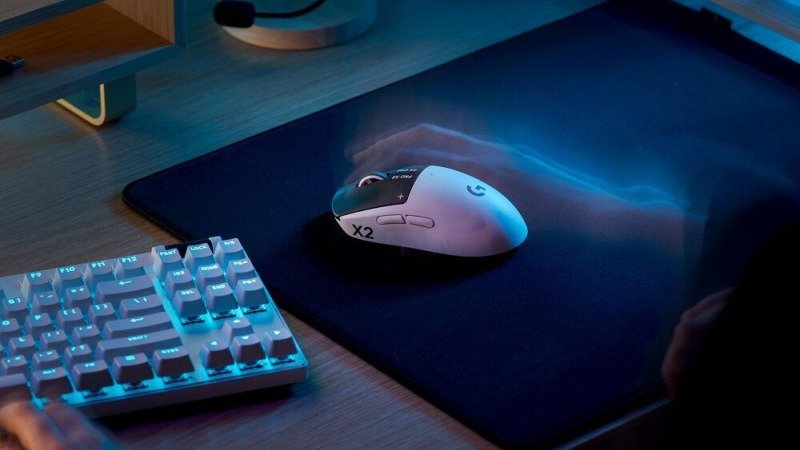
As this momentum builds, Logitech G’s new PRO X2 SUPERSTRIKE pushes competitive performance even further, introducing its breakthrough Haptic Inductive Trigger System (HITS) for ultra‑fast, customisable actuation and precise haptic feedback. Designed for pro‑level responsiveness, it pairs reduced click latency with the advanced HERO 2 sensor and long battery life to deliver the speed and accuracy today’s players demand.
For more information about the Logitech G and its products, visit logitechg.com.
Research & Sources
The research was commissioned in 2026 by Logitech G in coordination with Censuswide, polling 18,000 in total. 1,500 x respondents per market: UK, France, Germany, Spain, Poland, Switzerland, Sweden, USA, Brazil, South Korea, China, and Australia. Censuswide abide by and employ members of the Market Research Society which is based on the ESOMAR principles and are members of The British Polling Council. Where indicated: *Additional data supporting Logitech G’s findings sourced from Riot Games/Stream Hatchet, Hero Esports, Xrep, Verified Market Research, and Newzoo.
About Logitech
Logitech designs software-enabled hardware solutions that help businesses thrive and unite people when working, creating, gaming, and streaming. As the point of connection between people and the digital world, our mission is to extend human potential in work and play, in a way that is good for people and the planet. Founded in 1981, Logitech International is a Swiss public company listed on the SIX Swiss Exchange (LOGN) and the Nasdaq Global Select Market (LOGI). Find Logitech and its other brands, including Logitech G, at www.logitech.com or the company blog.
Logitech, Logitech G, and LIGHTSPEED are trademarks or registered trademarks of Logitech Europe S.A. and/or its affiliates in the U.S. and other countries. All other trademarks are the property of their respective owners. For more information about Logitech and its products, visit the company’s website at www.logitech.com.
All other product names, logos, and brands are the property of their respective owners and used in this press release for identification purposes only. Use of these names, logos, and brands does not imply endorsement.
Contact
Matthew Mortellaro
Logitech G
mmortellaro@logitech.com